

Australia's Push for Factory-Built Prefabricated Housing Sparks New Discussion of Chinese Prefab Suppliers
News originally published by
EIN Presswire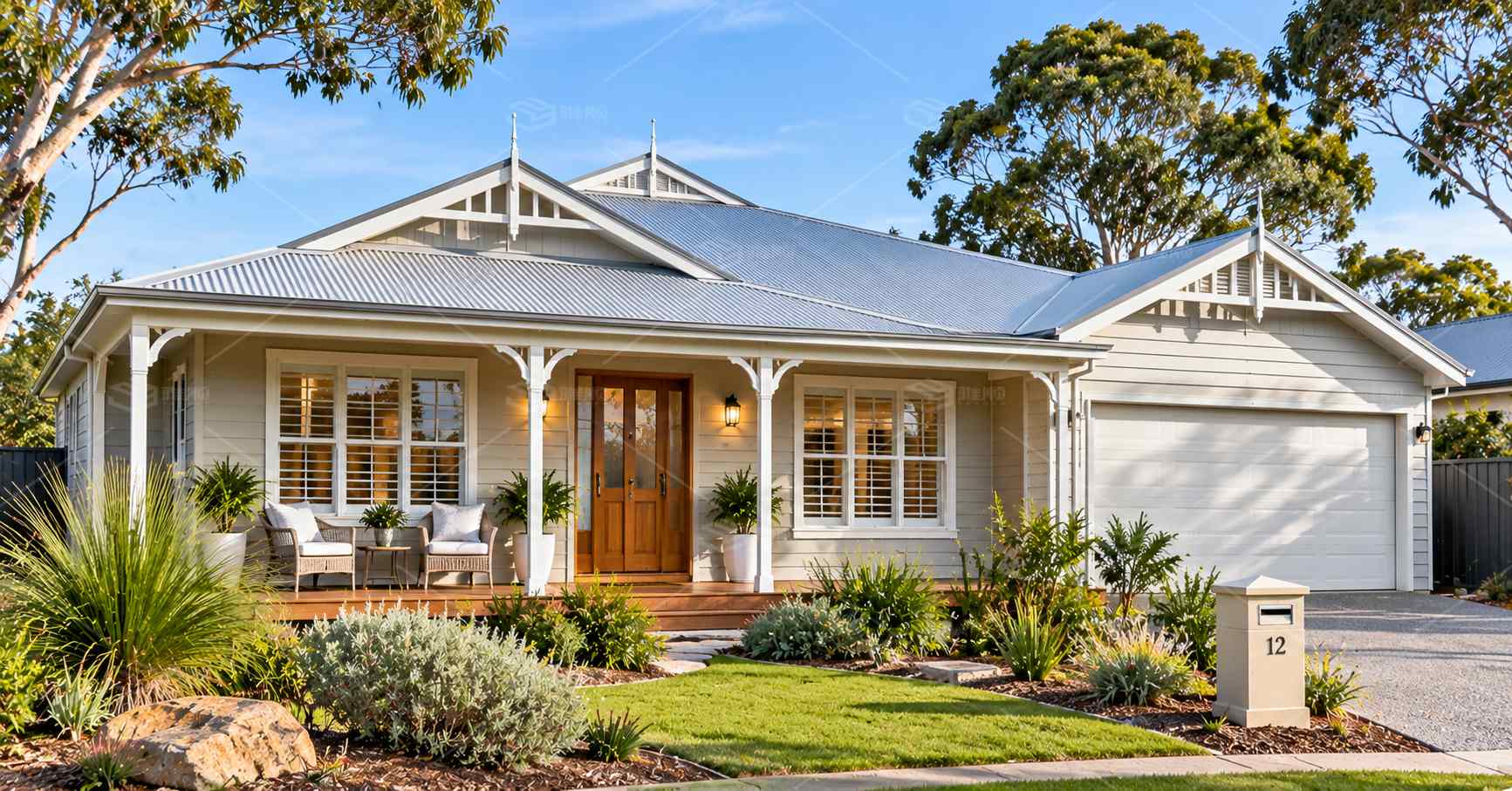
Conceptual illustration of an Australian-style prefabricated villa, highlighting factory-built housing design.
NSW's push for factory-built housing highlights new opportunities and Australian compliance requirements for Chinese prefab manufacturers such as YSHUN.
Australia is accelerating the development of factory-built prefabricated housing and modern methods of construction. As the New South Wales Government advances investment in advanced building manufacturing facilities, building approval reform and industry partnerships, Chinese prefabricated building manufacturers are facing new opportunities in overseas markets. At the same time, Australia's National Construction Code, light steel structural design standards and material conformity requirements have become important conditions for overseas suppliers participating in local building projects.
Falling Housing Construction Productivity in Australia Brings Factory-Built Housing Into Focus
On November 19, 2026, ABC News reported that the Committee for Sydney, a Sydney urban think tank, had called on the New South Wales Government to expand the use of Modern Methods of Construction (MMC), and to encourage building companies to invest in factory prefabrication and modular building manufacturing facilities by establishing a stable pipeline of housing projects.
According to Australian Bureau of Statistics data cited in the report, productivity in Australian housing construction fell by around 21 per cent between 2013 and 2025.
At the same time, modern methods of construction currently account for only around 5 per cent of new homes in Australia, indicating that factory-built housing remains at a relatively limited stage of market application.
Modern methods of construction generally include factory-prefabricated building components, light steel structural framing, modular building units and other offsite manufacturing technologies.
Unlike traditional on-site construction, part of a building's structure and components can be produced, inspected and prepared for transport in a factory, then delivered to the project site for installation.
This production method can improve coordination between manufacturing and construction, although actual construction time, cost and efficiency still depend on project scale, design complexity, transport conditions and site management.
China-Made Prefabricated Modules Used in a Sydney Housing Project
In its November 19 report, ABC News featured a student accommodation project in Sydney's Macquarie Park.
The project used modular apartment units produced in factories in China, and recently completed the on-site assembly of 19 storeys of prefabricated modules, a process that took around 19 weeks.
The project developer, Freecity, said that compared with similar projects built using traditional construction methods, the overall construction time for the project is expected to be reduced by around 25 per cent.
That figure reflects only the project developer's expectation, and does not mean that all prefabricated buildings can achieve the same construction efficiency.
The project nevertheless demonstrates a practical model in which building modules manufactured in Chinese factories participate in Australian construction projects through an international supply chain.
From engineering design and factory production to international logistics and on-site installation, cross-border prefabricated building supply chains are becoming part of the discussion in Australia's building industry.
NSW Government Announces Development of a Modern Methods of Construction Industry
Australia's focus on factory-built housing comes not only from industry research, but is also reflected in government industry policy.
On June 21, 2026, the New South Wales Government released From Factory to Front Door: Plan to Deliver Homes Faster in NSW, proposing to support the development of prefabricated building components, modular housing and digital building manufacturing technologies through a Modern Methods of Construction Innovation Facility.
According to the government announcement, the plan uses a two-stage competitive procurement process, inviting experienced Australian and international modern methods of construction companies to participate as partners.
Potential partners need to demonstrate commercial readiness, technical capability, and delivery experience across different types of building projects, including medium-density housing.
The government also proposed advancing building procurement reform, so that modern methods of construction products can gain more opportunities to participate in government projects.
At the same time, the New South Wales Government announced an investment of A$32.3 million over four years to modernise the building approvals system and bring modern methods of construction into the relevant regulatory reforms.
This includes funding arrangements for establishing a regulatory framework for modern methods of construction and advancing a certification system.
These policies indicate that New South Wales is promoting the development of building manufacturing technology through industry investment, public procurement and approval reform.
However, one focus of the policies is expanding local manufacturing capability, and they do not mean that the Australian Government has opened direct procurement channels to all overseas prefabricated building manufacturers.
For Chinese building companies, the government policies provide a basis for studying the Australian market and assessing industry partnership models, but actual participation still needs to meet project procurement and technical requirements.
Building Reforms Advance the Regulatory Framework for Prefabricated Construction in Australia
On August 5, 2026, the New South Wales Government further released A Modern Era of Construction Methods and Approvals Begins.
The government announced that Parliament had passed building reforms, providing a basis for the legal recognition of modern methods of construction and prefabricated buildings and for improving the approvals system.
The reforms aim to improve the connection between modern methods of construction and the building approvals system, and to reduce obstacles created by some traditional approval procedures.
At the same time, the Australian Building Codes Board (ABCB) is advancing consultation on a national voluntary certification scheme for modern methods of construction.
The Prefabricated, Modular and Offsite Construction Handbook previously published by the ABCB also provides technical guidance for prefabricated buildings, modular buildings and offsite construction.
The handbook explains the relationship between these building methods and Australia's National Construction Code, but it does not in itself constitute a standalone product certification or building approval.
As the policy and regulatory framework gradually improves, the Australian building market is placing clearer attention on engineering evidence, quality management and technical documentation for prefabricated building products.
Chinese Prefabricated Building Suppliers Face New Market Opportunities
China has developed manufacturing capability in areas including light steel structural housing, factory-prefabricated building components, modular accommodation buildings and industrial building systems.
For Australian developers exploring factory-built construction, overseas supply chains can provide more building component and manufacturing options for comparison.
However, procurement requirements in the Australian market are not limited to manufacturing cost and delivery capability.
Whether a building product
Jackie Chan
Guangdong Yashun Housing Technology Co., Ltd.
+86 13123136266
Visit us on social media:
Facebook
YouTube
Legal Disclaimer:
EIN Presswire provides this news content "as is" without warranty of any kind. We do not accept any responsibility or liability for the accuracy, content, images, videos, licenses, completeness, legality, or reliability of the information contained in this article. If you have any complaints or copyright issues related to this article, kindly contact the author above.
