

Know What's Coming Next in Codes While Still Planning
DRM specializes in the design, engineering coordination, permitting and development of commercial cannabis cultivation and processing facilities

Nic Bucholz recommends operators plan for code changes now when planning and building their facility.

DRM provides effective and compliant cannabis cultivation facility design worldwide.
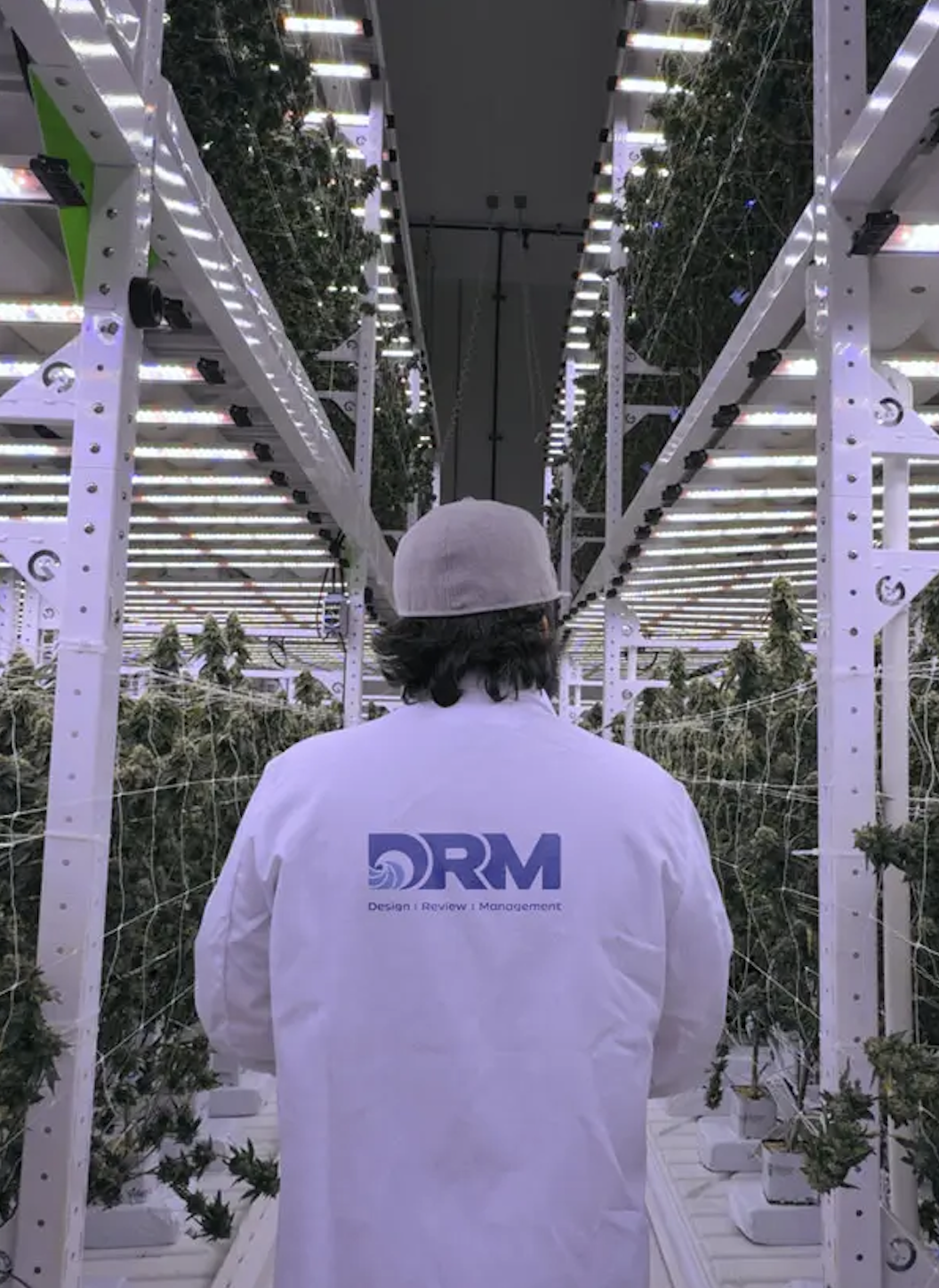
DRM provides cannabis consulting services, business advisory, and cannabis HVAC systems design.
New codes are already reshaping HVAC and dehumidification requirements. DRM says operators need to plan for them now - not after they’ve spent the money.
The codes governing those facilities won't stand still.
That's why Nic Bucholz, CEO of DRM, says cannabis operators planning significant facility investments in 2026 need to ask a different question before they spend the money:
Will this facility still make sense under the next generation of codes?
Across the country, changes involving energy efficiency, HVAC, dehumidification, electrical systems, workplace safety and building standards are either taking effect, moving through regulatory review or being developed as part of upcoming code cycles.
For cannabis operators, those changes can have expensive consequences when facility design, equipment and infrastructure decisions are made without considering what's coming next.
"Meeting today's code is the starting point, not the entire strategy," Nic said. "If you're spending $500,000 or $5 million on a facility, you need to understand whether the mechanical, electrical and building infrastructure you're paying for today gives you somewhere to go tomorrow."
California Offers a Preview of What's Ahead
California illustrates just how quickly the regulatory environment surrounding controlled environment horticulture, or CEH, is evolving. The state's 2025 Energy Code took effect January 1, 2026 and already includes specific requirements for CEH facilities involving dehumidification equipment, horticultural lighting, electrical power distribution and other systems.
Those requirements aren't limited to new cultivation facilities. Newly installed HVAC or dehumidification systems in existing indoor-growing facilities must also comply with applicable CEH provisions. Certain horticultural lighting alterations can trigger compliance requirements as well.
More change is already on the calendar.
California's 2025 Intervening Code Adoption Cycle will produce supplements to the state's 2025 Building Standards Code that become effective July 1, 2027. The cycle includes changes involving portions of California's building, green building, electrical, mechanical and other standards. At the same time, California is developing its next major Energy Code, scheduled for adoption as part of the 2028 standards and implementation in 2029.
For large, high-intensity indoor cultivation facilities, a proposal under discussion concerns the relationship between HVAC and dehumidification.
“That’s where operators really need to pay attention,” Nic said. “You can’t look at HVAC and dehumidification as two unrelated equipment purchases. They are managing the same environment and interacting constantly. Your irrigation is considered the circulatory system, but your HVAC is considered the lifeline for everything else. The equipment, electrical capacity and facility itself all have to work together.”
Supplemental Dehumidification Could Become a Much Bigger Design Decision
Cannabis cultivation creates unusually high latent loads as plants release moisture into the grow environment. Controlling temperature is only part of the challenge. Facilities must continuously manage both temperature and humidity as conditions change between lights-on and lights-off periods and throughout the plant growth cycle.
Historically, some facilities have addressed humidity problems by adding standalone dehumidification after the primary HVAC system was selected or even after cultivation began.
California's proposed CEH requirements point toward a more integrated approach.
For covered high-intensity CEH spaces, the proposal currently being developed would establish requirements involving HVAC/dehumidification system sizing, equipment qualification, heat recovery and rejection, controls and performance verification.
The proposal would require design calculations to account for both sensible and latent loads under representative early-, mid- and late-stage grow conditions, including lights-on and lights-off operation.
It would also require covered systems to coordinate temperature and humidity controls rather than allowing HVAC and dehumidification equipment to operate as unrelated systems.
Supplemental dehumidification would still have a role, but operators would need to understand when and how it can operate within the overall mechanical strategy. The proposal also distinguishes between consumer and commercial dehumidification equipment and would create qualification and testing requirements for commercial units used in covered CEH applications.
That matters to an operator considering a major equipment purchase today.
"Adding dehumidifiers because the room isn't holding humidity isn't necessarily solving the underlying problem," Nic said. "Those units produce heat. That heat has to go somewhere, and your cooling system may then have to remove it. You've added equipment, electrical load and operating cost, and you may still not have an optimized system."
This Isn't Just a California Issue
California may have some of the country's most detailed cultivation-specific energy requirements, but the broader trend isn't confined to the West Coast. Massachusetts, for example, enacted legislation in 2026 requiring the state's Cannabis Control Commission to review cannabis regulations concerning workplace safety, specifically including air quality and first-responder access, by July 1, 2027. Massachusetts already requires cannabis cultivation facilities to address energy efficiency and environmental considerations, with HVAC and dehumidification recognized as major drivers of cultivation energy use.
The outcome of the 2027 review isn't predetermined, but for operators considering facility renovations or new construction, the review provides another reason to think beyond current minimum requirements.
Meanwhile, the International Code Council is developing the 2027 generation of its model codes. Those codes provide the foundation for building and related standards eventually adopted and amended by many states and local jurisdictions.
California's own upcoming triennial process illustrates that progression. State agencies are preparing to review the 2027 editions of model building, existing building, fire and other codes, along with updated mechanical, plumbing and electrical codes, for incorporation into California's 2028 Building Standards Code.
"There isn't one national cannabis building code that suddenly changes on January 1," Nic said. " What we’re seeing is an evolving network of building, mechanical, electrical, fire, energy and cannabis-specific requirements. Even though there’s no code written specifically for cannabis, officials are making significant cannabis-specific changes to existing codes, which isn’t common and that has a real financial impact on every grow.”
Six Things Cannabis Operators Should Review Before Making a Major Investment
DRM recommends that operators planning construction, expansion, renovation or significant equipment purchases review six areas before finalizing plans.
1. HVAC and dehumidification strategy
Calculate actual sensible and latent loads rather than relying on generalized assumptions or equipment rules of thumb. Determine how conditions change through the cultivation cycle and how the HVAC and dehumidification systems will respond together.
2. Electrical capacity
Evaluate whether the facility's existing electrical infrastructure can support HVAC, dehumidification, horticultural lighting, controls, pumps and other equipment while preserving capacity for future changes or expansion.
A mechanical equipment decision can become an electrical infrastructure decision very quickly.
3. Equipment selection
Evaluate equipment based on how it performs as part of the complete cultivation environment, not simply its purchase price or individual efficiency rating.
That is particularly important with supplemental dehumidification. Operators should understand why the equipment is needed, when it will operate, how it will be controlled, how much heat it introduces and how that heat will be managed.
4. Fire and life safety
Indoor cultivation facilities can trigger requirements involving occupancy classifications, sprinklers, egress, emergency access, hazardous materials and other fire and life-safety considerations. Moving walls, adding cultivation areas or changing processing activities can therefore have implications well beyond the grow room.
5. Permitting and applicable code cycles
Operators should determine which code edition is likely to apply based on the jurisdiction, permit application date and construction schedule. A project conceived under one code cycle may ultimately be submitted or altered under another.
6. Expansion flexibility
Facility infrastructure should be evaluated against the operator's longer-term plans. If additional canopy, rooms, processing equipment or environmental systems may be added later, today's electrical service, mechanical infrastructure, equipment locations and facility layout can either make that expansion easier or turn it into an expensive redesign.
The Cheapest Equipment Can Become the Most Expensive Solution
The cannabis industry's continuing margin pressure makes controlling capital expenses essential. But reducing upfront cost without considering lifecycle performance can create the opposite result.
An HVAC system that cannot adequately handle latent load may require supplemental dehumidification. Added dehumidification can increase electrical demand and generate additional heat. That heat can increase cooling requirements. Increased cooling and electrical loads can require infrastructure changes.
Suddenly, an equipment decision has become a facility redesign.
The same problem can occur when operators purchase equipment before engineering is complete, build rooms without sufficient mechanical space, underestimate electrical capacity or plan expansions without evaluating how existing systems will accommodate additional loads. Changing course after permitting or construction begins can mean revised engineering drawings, new equipment, electrical upgrades, additional plan review, construction delays and lost production time.
"The least expensive place to solve these problems is on paper," Nic explained. "Once equipment has been ordered, walls have been built and permits have been submitted, your options get more expensive very quickly."
Existing Facilities Need to Pay Attention Too
Operators don't need to be building a new cultivation facility for changing codes to matter. California's current CEH requirements provide a clear example. The state's 2025 Energy Code applies CEH provisions to certain additions and alterations, including newly installed HVAC and dehumidification systems in existing indoor-growing facilities.
Lighting alterations can trigger requirements as well.
That makes it important for existing facility owners to understand whether what appears to be a simple equipment replacement or room renovation could trigger broader code, engineering or permitting considerations.
DRM has seen the financial consequences when facility systems aren't considered together. On one cultivation project, the firm was brought in after a previous design specified oversized catalog mechanical equipment the facility didn’t need, when a simpler, standard system would have handled the load, contributing to more than $1 million in unnecessary expenses. For Nic, cases like that demonstrate why facility planning can't stop at code compliance.
2026 Is the Year to Plan, Not Panic
None of these developments mean cannabis operators should freeze facility investments until every future code is finalized.
Quite the opposite.
Nic says operators should use the current period to make better-informed decisions about projects that will remain in service long after today's requirements have changed.
Some 2027 changes are already scheduled. Others remain under review. The next generation of model codes is being developed, while states including California are simultaneously working toward future building and energy standards.
The details will continue to evolve.
The direction is much clearer: cultivation facilities are being expected to become more sophisticated in how they manage energy, environmental conditions, equipment performance and building safety.
"Don't wait until a code change forces you to rethink the facility," Nic said. "If you're buying a major piece of equipment, expanding canopy, renovating rooms or designing a new facility, that's the time to have the conversation. We can look at what you need today, what the codes require and where the requirements are heading before you spend the money."
DRM works with existing and prospective cannabis operators to evaluate facilities, design cultivation environments, coordinate engineering, navigate permitting and develop mechanical and infrastructure strategies that support efficient operation and long-term growth.
Before making a significant cultivation facility investment, operators can consult with DRM to evaluate how today's design and equipment decisions may affect tomorrow's facility.
About DRM
DRM specializes in the design, engineering coordination, permitting and development of commercial cannabis cultivation and processing facilities. Led by CEO Nic Bucholz, DRM helps cannabis operators translate cultivation goals into efficient, compliant and scalable facilities by integrating facility design, environmental systems, workflow, engineering and real-world operational requirements.
For more information, visit DRM's website at DRM.design.
Nic Bucholz, CEO
DRM
+1 916-415-8492
email us here
Visit us on social media:
LinkedIn
Instagram
Facebook
YouTube
Legal Disclaimer:
EIN Presswire provides this news content "as is" without warranty of any kind. We do not accept any responsibility or liability for the accuracy, content, images, videos, licenses, completeness, legality, or reliability of the information contained in this article. If you have any complaints or copyright issues related to this article, kindly contact the author above.
