

World Food Supplement Association Announces Dual United Nations Procurement and Implementing-Partner Qualifications
New York-based association says the milestone will support evidence-led nutrition standards, advanced ingredient research, global nutrition data and assistance programs in underserved regions.
NEW YORK, Aug. 07, 2026 (GLOBE NEWSWIRE) -- The World Food Supplement Association (WFSA), announced today that it has completed qualification procedures in two United Nations engagement channels: acceptance as a supplier on the United Nations Global Marketplace (UNGM No. 1251450) and acceptance as an implementing-partner organization through the United Nations Partner Portal (UNPP No. 8048).
UNGM is the United Nations system’s official procurement platform, through which eligible suppliers can present their capabilities, monitor opportunities and participate in competitive processes. The UN Partner Portal supports structured cooperation between United Nations agencies and eligible civil-society organizations in humanitarian, development and related programs
Registration establishes institutional visibility and eligibility to pursue relevant opportunities, subject to the requirements, due diligence, technical review and selection procedures of each United Nations entity. WFSA said the new status creates a responsibility to demonstrate competence, transparency and measurable value in every procurement or partnership process it enters.
WFSA’s mission is to advance the sustainable development of the food-supplement sector while protecting global public health. The Association works across nutrition science, ingredient research, quality systems, professional education, policy dialogue and public-health cooperation. It reports a network of more than 400 collaborating institutions worldwide, spanning research, laboratories, universities, industry, public-interest groups and technical specialists.
The Association said its scientific work follows a disciplined evidence framework emphasizing accurate ingredient characterization, validated testing methods, reproducible data, appropriate study design and responsible interpretation. It also calls for safety assessment, regulatory awareness, traceability and the disclosure and management of potential conflicts of interest. According to WFSA, scientific rigor is both a research principle and a prerequisite for public trust in a rapidly expanding global market.
Registration on UNGM gives WFSA a formal point of entry into a procurement environment used across the United Nations system. The practical significance lies in making its organizational profile visible to procurement personnel, identifying relevant solicitations and, when requirements are met, submitting proposals within its areas of competence. Potential areas may include technical research, laboratory coordination, nutrition-data services, professional training, standards-related advisory work, public-information programs and nutrition-support materials.
United Nations procurement also carries demanding expectations. Competitive procedures may require clear technical specifications, fair pricing, documented quality controls, supply-chain traceability, ethical conduct, financial capacity and reliable delivery across complex operating environments. WFSA said it will treat these expectations as standing institutional disciplines and will strengthen internal procurement governance, supplier review, recordkeeping and performance monitoring.
Implementing-partner registration has a different but complementary significance. Implementing partners may be called upon to translate policy objectives and program designs into field-level action in cooperation with United Nations agencies. Such work can involve community engagement, local coordination, beneficiary protection, financial stewardship, monitoring and evaluation, safeguarding, reporting and measurable outcomes. WFSA said the status highlights its ability to connect scientific expertise with practical nutrition interventions.
The Association acknowledged that standing in this field is earned through performance. Registration creates access to opportunities, but project participation remains subject to agency-specific selection, verification and agreement. WFSA said it will build its future program portfolio around clearly defined needs, local participation, auditable resources and outcomes that can be independently assessed.
Looking ahead, WFSA identified four strategic priorities. The first is the exploration of internationally applicable industry standards. It intends to convene researchers, laboratories, manufacturers, regulators and public-health stakeholders to examine testing methods, quality benchmarks, ingredient identity, stability, labeling transparency and responsible communication. The objective, it said, is not to impose a private standard, but to develop technical proposals that can be debated and improved across jurisdictions.
The second priority is research on frontier nutritional ingredients. WFSA plans to support work on ingredient origin, composition, mechanism, safety, dosage, bioavailability, stability, manufacturing consistency and environmental sustainability. Particular attention will be given to evidence gaps, population-specific considerations and the distinction between promising laboratory findings and conclusions supported by human data.
The third priority is the development of a global population nutrition index and related statistical systems. The initiative would seek comparable indicators on dietary adequacy, micronutrient risk, access, affordability and regional vulnerability. WFSA said such a system must use transparent methodology, responsible data governance, privacy safeguards and collaboration with qualified local institutions. Its long-term ambition is to contribute data that improve early warning, resource allocation and evaluation.
The fourth priority is assistance for developing countries and populations affected by malnutrition. Future initiatives may combine needs assessment, local capacity building, nutrition education, responsible supplementation, fortified-food support, technical training and transparent distribution systems. Programs would be designed with local partners and adapted to cultural, economic and health conditions rather than exported as uniform solutions.
WFSA said it will approach its potential role as a United Nations implementing partner with a duty to protect beneficiaries, prevent misuse of resources, maintain financial and operational transparency, respect local leadership and report results honestly. It also plans to reinforce policies on ethics, anti-corruption, safeguarding, data protection and responsible communications before pursuing assignments.
In its statement, the Association said the milestone is neither an endpoint nor a substitute for performance. It described the development as an invitation to meet higher standards of evidence, governance and service, and said its responsibility is to turn scientific knowledge into practical value while helping nutrition innovation reach communities safely, accountably and equitably.
About the World Food Supplement Association
The World Food Supplement Association is an international organization registered in New York and operating through a global network of more than 400 collaborating institutions. Its work focuses on the scientific development of food supplements, industry standards, advanced ingredients, education, public-health cooperation and nutrition-related social responsibility.
Media Contact
Organization: World Food Supplement Association
Contact: Simon Allan Adriatico
Email: support@wfsas.org
Website: www.wfsas.org
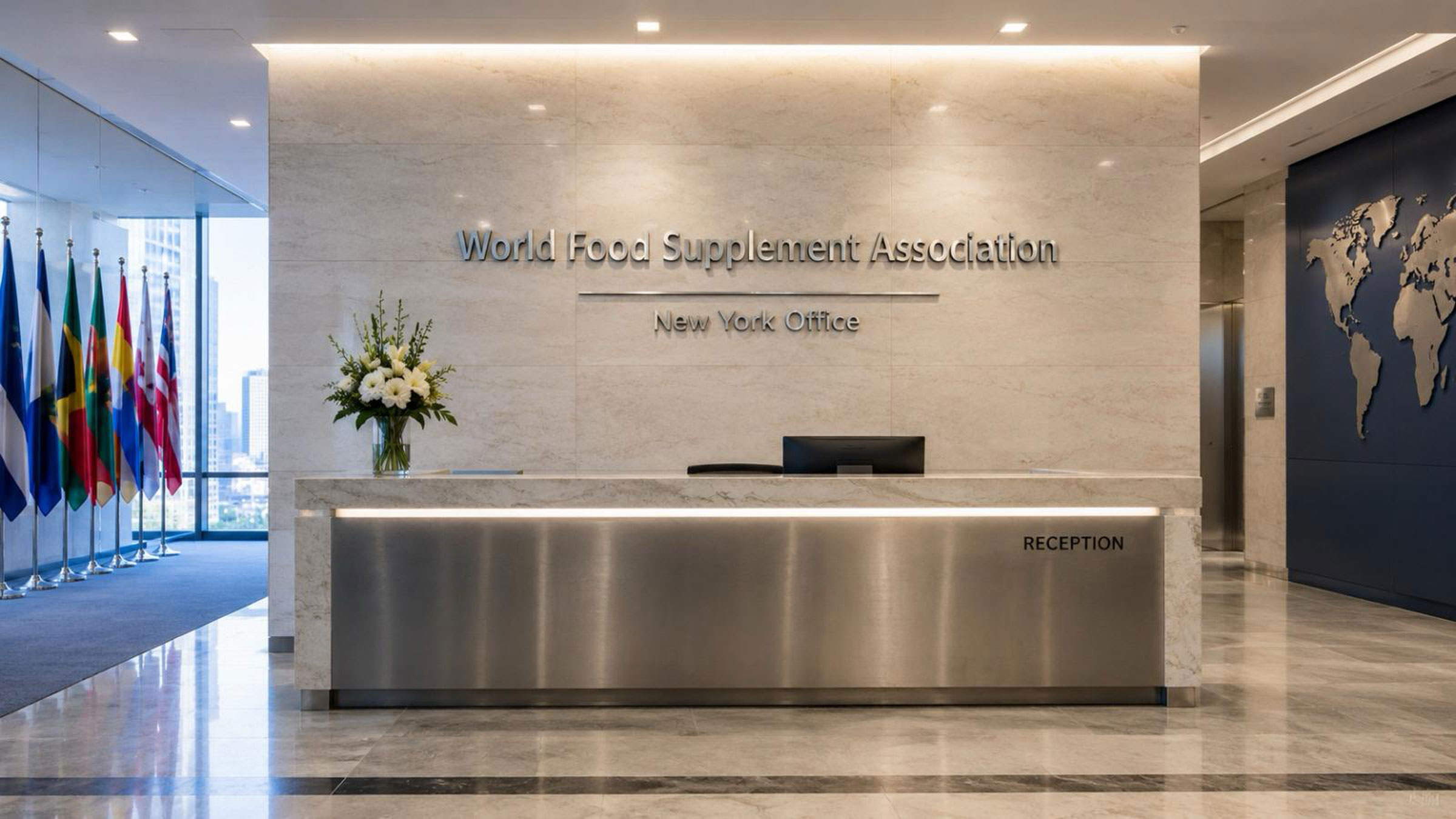
A photo accompanying this announcement is available at https://www.globenewswire.com/NewsRoom/AttachmentNg/5c2ac223-fe57-436c-84ac-7cfa041e810e

image 1

image 1
Legal Disclaimer:
EIN Presswire provides this news content "as is" without warranty of any kind. We do not accept any responsibility or liability for the accuracy, content, images, videos, licenses, completeness, legality, or reliability of the information contained in this article. If you have any complaints or copyright issues related to this article, kindly contact the author above.
