

SNU Eye Clinic Emphasizes Early Detection to Distinguish Cataracts From Presbyopia
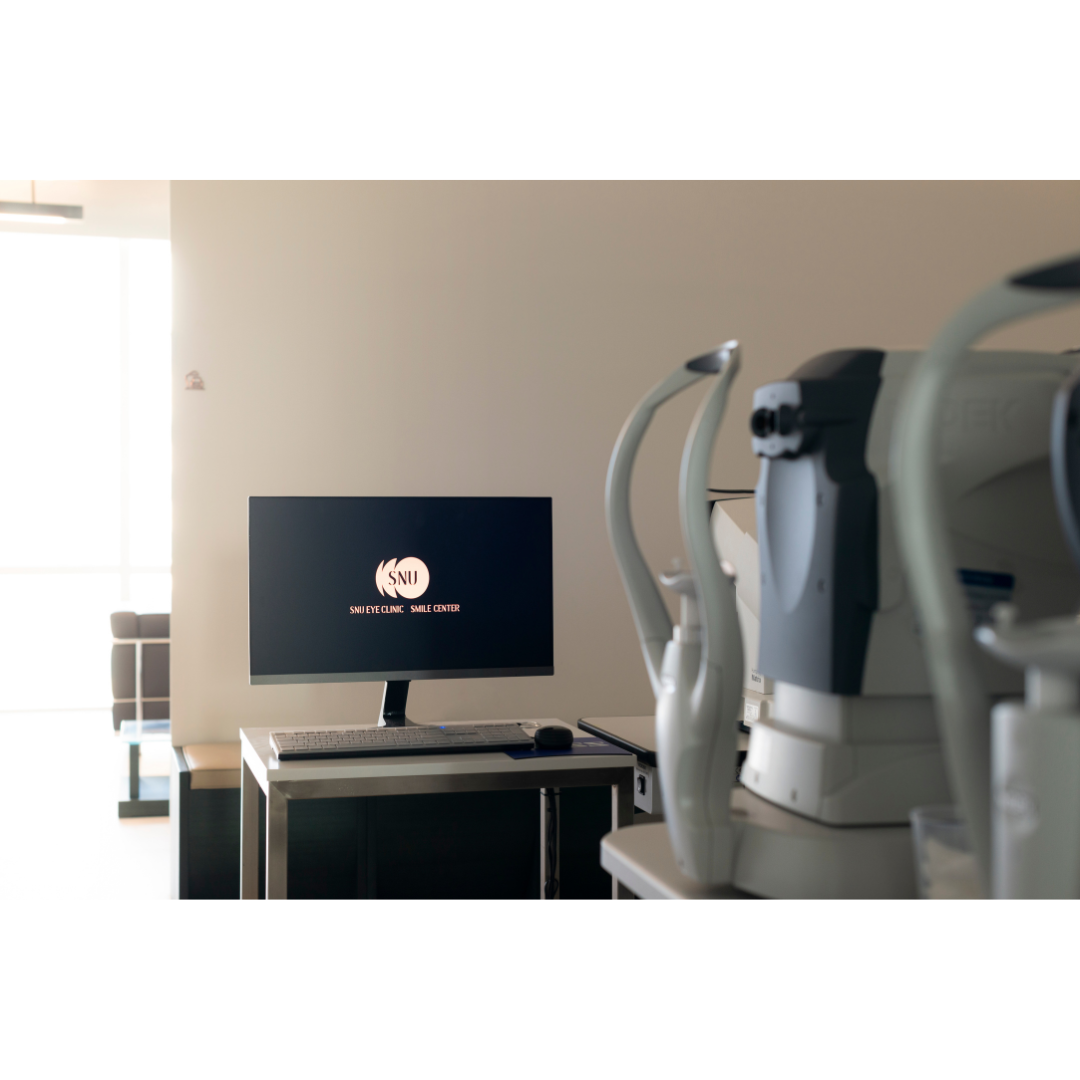
Advanced diagnostic equipment at SNU Eye Clinic in Gangnam, Seoul, supports comprehensive eye examinations for cataracts, presbyopia, and personalized treatment planning.

Dr. Chung Eui Sang, Chief Director of SNU Eye Clinic, performs cataract surgery using advanced surgical technology to deliver personalized vision correction.

Dr. Chung Eui Sang, Chief Director of SNU Eye Clinic, provides personalized cataract surgery and vision correction based on each patient's eye condition and lifestyle.
SNU Eye Clinic explains why early cataract symptoms are often mistaken for presbyopia and why comprehensive eye examinations are essential.
A cataract occurs when the eye's natural lens becomes cloudy, causing vision to appear blurred or hazy, as though looking through fog. Since the condition progresses gradually, recognizing early symptoms and receiving regular eye examinations are essential for timely treatment.
While a cataract self-assessment cannot provide a medical diagnosis, it can help individuals recognize warning signs and determine when to seek an ophthalmologist's evaluation. Common symptoms include:
Blurred or cloudy vision, similar to looking through a fogged window
Better vision in dim lighting than in bright environments (day blindness)
Double vision in one eye (monocular diplopia)
Increased glare, halos around lights, and colors appearing more yellow than before
Suddenly being able to read small print without reading glasses due to changes in the eye's lens
If these symptoms become frequent or progressively worsen, patients are encouraged to undergo a comprehensive eye examination rather than relying solely on self-assessment. Cataract treatment is determined after carefully evaluating the degree of lens opacity, visual acuity, lifestyle, and each patient's individual visual needs to identify the most appropriate timing for surgery.
During cataract surgery, patients may choose between monofocal and multifocal intraocular lenses (IOLs) based on their lifestyle, occupation, and daily visual requirements. Monofocal IOLs provide clear focus at either near or distance vision, while multifocal IOLs are designed to improve vision across multiple distances, including near, intermediate, and far. Because no single lens is ideal for every patient, thorough preoperative testing and detailed consultation are essential for selecting the most suitable option.
Managing dry eye disease before surgery is also an important part of the treatment process. Significant dry eye can affect corneal measurements, reducing the accuracy of intraocular lens power calculations. Addressing ocular surface health before surgery helps improve measurement precision and contributes to better visual outcomes.
Located in Gangnam, Seoul, South Korea, SNU Eye Clinic provides personalized care across a wide range of vision correction services, including cataract surgery and presbyopia treatment. The clinic develops individualized surgical plans based on comprehensive diagnostic examinations, each patient's eye condition, and their lifestyle.
"Many patients mistake the early symptoms of cataracts for normal age-related presbyopia because the two conditions share many similarities," said Dr. Chung Eui Sang, Chief Director of SNU Eye Clinic. "If you experience persistent blurry vision, double vision, glare, or other visual changes, it is important not to rely solely on self-assessment. A comprehensive examination by an ophthalmologist is the best way to accurately evaluate your eye health and determine the most appropriate treatment."
Samantha
SNU Eye Clinic
+82 10-5495-9632
snueye@snuseoul.com
Visit us on social media:
Instagram
Facebook
YouTube
TikTok
Other
Legal Disclaimer:
EIN Presswire provides this news content "as is" without warranty of any kind. We do not accept any responsibility or liability for the accuracy, content, images, videos, licenses, completeness, legality, or reliability of the information contained in this article. If you have any complaints or copyright issues related to this article, kindly contact the author above.
