

Get your economy news from the world
Provided by AGP
Systemic Value Creation for Africa

Article Author - Andrews Akoto-Addo
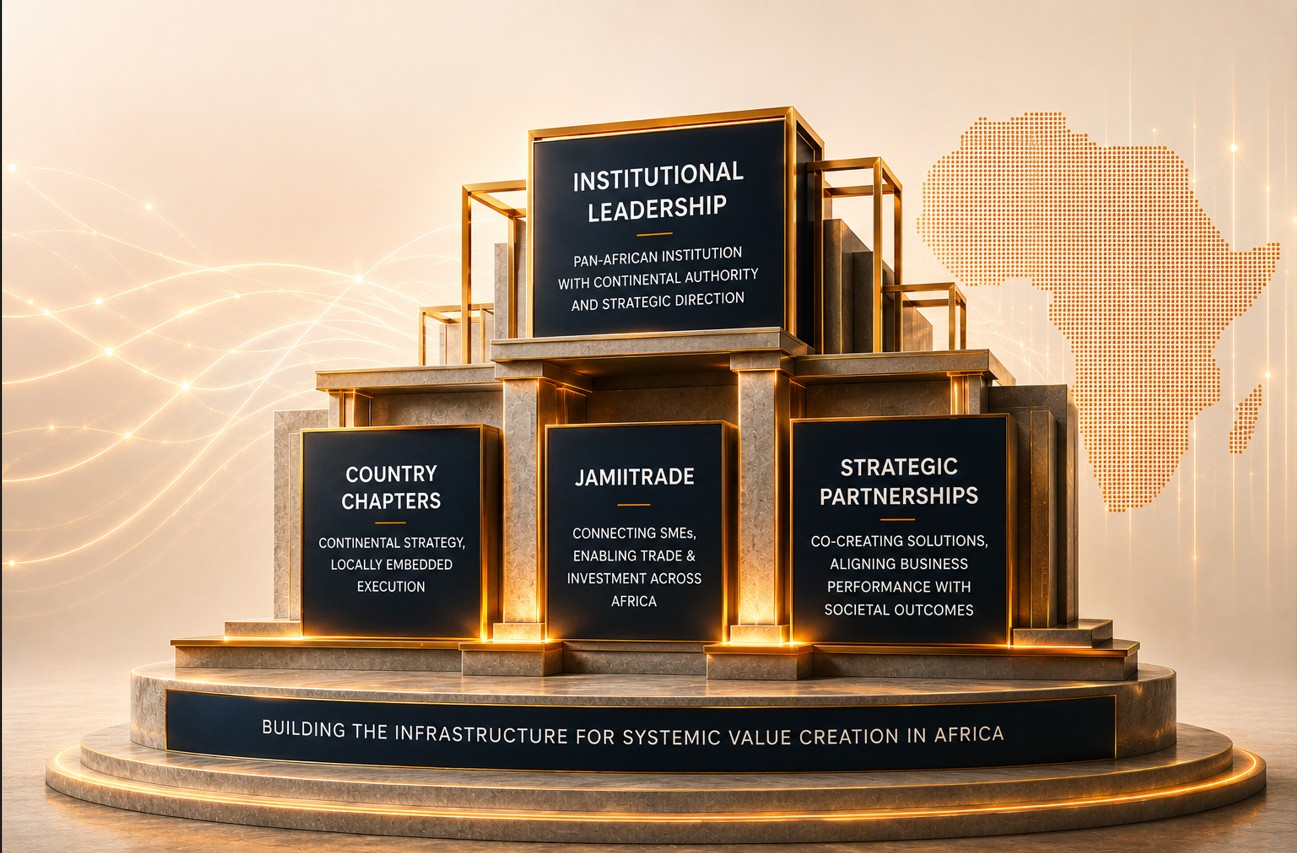
Shared Value Africa Systemic Value Creation

Shared Value Africa
Exploring How Institutional Leadership and Market Execution Can Advance Profit With Purpose Across Africa
Systemic change does not come from networks alone. It comes from aligned institutions willing to build, invest, and lead together.”
ACCRA, GHANA, May 25, 2026 /EINPresswire.com/ -- Across Africa, conversations around ESG, sustainability, and impact have matured significantly. The challenge facing the continent is no longer awareness. It is execution.— Andrews Akoto-Addo
Businesses increasingly understand the importance of value creation, yet the systems, institutional capability, and implementation structures required to operationalise it at scale remain fragmented across markets and sectors. It is within this context that the evolution of institutions such as Shared Value Africa must be understood - not simply as organisational growth, but as part of a broader shift toward building the institutional capability required to enable systemic value creation across Africa.
This is no longer about creating platforms for dialogue alone. It is about building the structures, partnerships, and execution capability required to move value creation from aspiration to implementation.
A Pan-African Institutional Framework for Systems Change
For years, alliance-based models played an important role in bringing together businesses, institutions, and ecosystem actors to advance Shared Value within Africa’s business discourse. But the continent’s needs have evolved. Today, businesses require more than alignment around ideas. They require :
• Implementation Capability,
• Measurable Frameworks,
• Governance and Gender risk integration,
• Ecosystem Coordination,
• Market activation
• Translating strategy into execution.
It is this growing implementation gap that is driving the emergence of more structured institutional models across the continent. At its core, Shared Value Africa’s institutional approach focuses on supporting businesses to embed “Profit with Purpose” into how they operate, grow, and compete. This means recognising that competitiveness, inclusion, resilience, and sustainability are increasingly interconnected business imperatives. Importantly, this framework is not built around thought leadership alone. It is designed to bridge continental strategy with localised implementation across African markets, connecting leadership thinking with practical execution
From Strategy to Execution: The Business Model as an Enabler of Value Creation
What increasingly differentiates institutions such as Shared Value Africa in this next phase is the ability to move beyond advocacy into implementation. The model is intentionally structured to operate across multiple interfaces:
• Business to Business (B2B): Embedding Shared Value into corporate strategy, governance, and operations
• Business to Government (B2G): Supporting policy alignment and ecosystem activation
• Business to Community (B2C): Advancing inclusive economic participation
• Business to Institution (B2I) and Multilateral (B2M): Strengthening research, partnerships, and scale
Through advisory, training, convening, and implementation capability, the institution helps ensure that value creation moves from boardroom intent to measurable market outcomes.
This is ultimately what systemic change requires: ecosystems capable of connecting leadership thinking, institutional capability, and market-level execution.
Country Chapters: Localising a Continental Mandate
At the heart of this institutional model is one of its most important mechanisms: the Country Chapter platform. Country Chapters are not symbolic extensions. They are operational market activation platforms designed to translate pan-African strategy into local economic relevance and execution.
Their role includes:
• Building awareness and adoption of Shared Value within national markets
• Convening private sector, public sector, and ecosystem stakeholders
• Developing partnerships and commercial opportunities
• Aligning local priorities with continental strategy
• Supporting programmes that embed value creation into business practice
In markets such as Kenya, Nigeria, Ghana, Malawi, Botswana, and South Africa, these chapters are already contributing to engagement, partnerships, and implementation across multiple sectors. What makes the model particularly powerful is its design - Continental authority, locally embedded execution.
This structure enables Shared Value Africa to move beyond shaping discourse toward supporting market-level influence and implementation within different economic and societal contexts.
JamiiTrade: Building the Infrastructure for a Connected Africa
No discussion about systemic value creation in Africa is complete without addressing one of the continent’s most significant challenges: market fragmentation. Africa’s opportunity lies not only in its resources or demographics, but in its ability to connect markets, entrepreneurs, and value chains across the continent.
JamiiTrade is being developed as more than a platform; it is an ecosystem designed to support African SMEs and unlock intra-African trade and investment through:
• Education-led engagement and training
• Curated SME development and mentorship
• Investor matchmaking and deal facilitation
• AfCFTA-aligned market intelligence and connectivity
With SMEs contributing nearly 60% of GDP and 80% of jobs across Africa, their ability to scale is directly linked to the continent’s economic future.
In this context, platforms such as JamiiTrade represent an important part of the broader infrastructure required to connect enterprises, strengthen trade participation, and support more inclusive economic growth. Fundamentally, it reflects a practical expression of “Profit with Purpose,” where entrepreneurship, market access, and value creation converge.
Partnership as the New Currency of Impact
One of the most important shifts in Shared Value Africa’s institutional journey is the move away from passive membership models toward intentional, long-term partnerships. Systemic change does not come from networks alone. It comes from aligned institutions willing to build, invest, and lead together.
Shared Value Africa’s institutional model is therefore designed to:
• Co-create solutions with corporates and Enterprise Support Organisations (ESOs)
• Align business performance with societal outcomes
• Build ecosystems that sustain value creation over time
This is a fundamental reframing of how impact is delivered. From participation to partnership. From intent to accountability. From activity to measurable value creation.
A Leadership Imperative for Africa’s Future
Africa is not short of potential. It is not short of ambition. What it requires is institutional leadership capable of converting opportunity into measurable outcomes. The transition of Shared Value Africa into a pan-African institution reflects a broader shift taking place across the continent:
• From conversation to execution
• From fragmented efforts to integrated systems
• From short-term initiatives to long-term value creation
It is a recognition that Africa’s future will not be built by businesses that choose between profit and purpose, but by those that understand that the two are increasingly inseparable. As Africa evolves, the mandate becomes clear:
To build an Africa where businesses do not merely operate within society, but actively contribute to strengthening it.
That is what Profit with Purpose demands. And that is the institutional future Shared Value Africa is helping to build.
Wilhelmina Barnard
Shared Value Africa & Shift Impact Africa
+27 82 445 5274
email us here
Visit us on social media:
LinkedIn
Instagram
Facebook
YouTube
Other
Legal Disclaimer:
EIN Presswire provides this news content "as is" without warranty of any kind. We do not accept any responsibility or liability for the accuracy, content, images, videos, licenses, completeness, legality, or reliability of the information contained in this article. If you have any complaints or copyright issues related to this article, kindly contact the author above.
