
Reliability in Fluid Systems: ROKE's High-Quality Tube Fittings With Strong Pressure Resistance Set New Standards
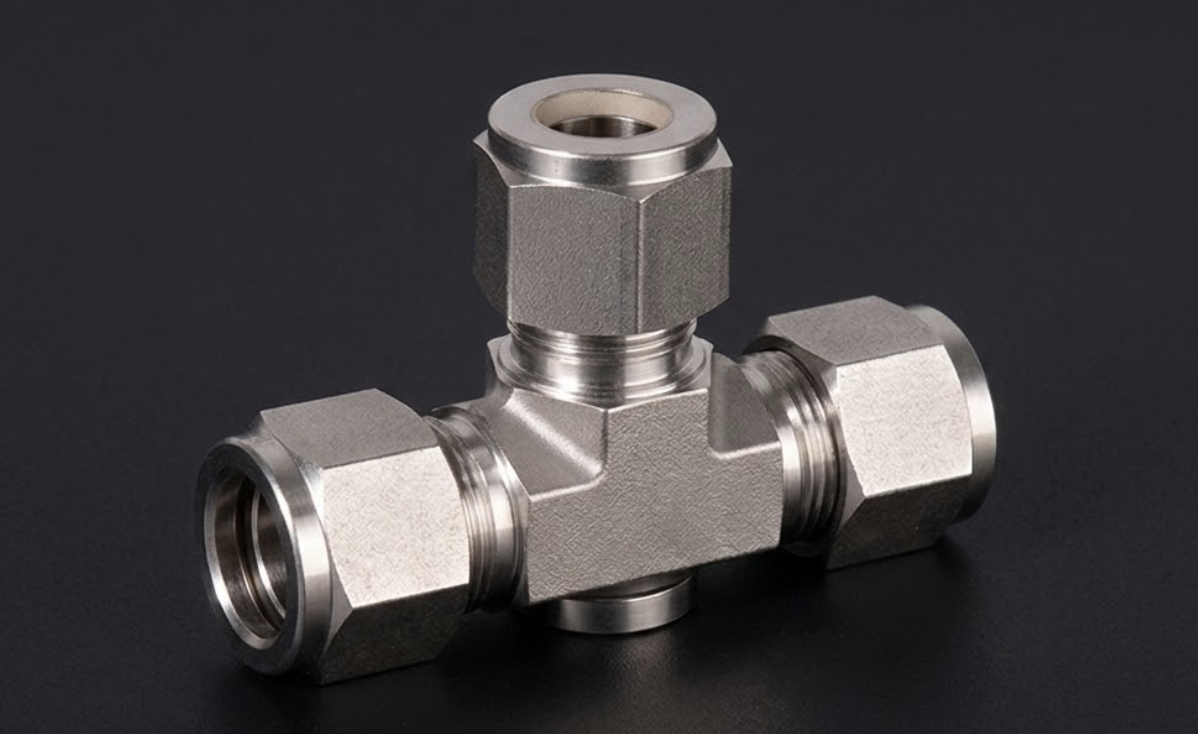
NANTONG, JIANGSU, CHINA, April 22, 2026 /EINPresswire.com/ -- In industrial fluid systems, component failures rarely stay contained. When a tube fitting cannot hold its rated pressure, the disruption moves fast — pipelines lose containment, instrumentation circuits go offline, and machinery comes to an unplanned halt. Downtime costs, contamination risks, and repair expenses quickly compound. Against this backdrop, the discussion of High-Quality Tube Fittings With Strong Pressure Resistance goes well beyond a supplier spec sheet. It reflects a design and manufacturing commitment that determines whether a fluid system performs safely over its intended service life. Nantong ROKE Fluid Equipment Co., Ltd., founded in 2008 and based in Hai'an High-Tech Zone, Nantong, has pursued this commitment through deliberate material selection, precision manufacturing, and a product range developed specifically for demanding pressure environments.
Why Material Grade Is the Starting Point, Not a Fine Print Detail
Performance limits are set by material properties before any machining step takes place. ROKE's Fractional Tube Union Tees use 2507/F53 Super Duplex stainless steel — an alloy grade that offers substantially higher pitting resistance than conventional 316L austenitic stainless. In service environments involving chloride-containing media, seawater exposure, or chemically active process fluids, this distinction is consequential. Standard austenitic grades can experience localized corrosion under these conditions, gradually compromising wall integrity over time. Moreover, Super Duplex alloys deliver the tensile strength and fatigue endurance that elevated working pressures require. ROKE's choice of 2507/F53 across the F53 series reflects a straightforward engineering principle: specifying a material grade that matches the service environment eliminates an entire category of failure risk before the fitting is even installed.
Reading the Numbers — What ROKE's Pressure Ratings Actually Tell You
The F53-UT-FT series provides working pressure data across its complete size range, and those numbers reward a closer look. At the 1/16-inch tube OD, the fitting operates at 11,000 PSI. The 1/8-inch and 3/16-inch sizes both hold 10,200 PSI. Further up the range, the 5/16-inch size rates at 8,000 PSI, the 1/2-inch at 6,700 PSI, and the 7/8-inch at 3,600 PSI. This graduated relationship between tube outer diameter and working pressure follows pressure vessel engineering fundamentals: as tube OD increases, the wall-to-diameter ratio changes, and pressure ratings adjust accordingly. Publishing this data in full across every SKU allows engineers to select fittings against actual system operating pressures during the design phase — a step that reduces the risk of under-rating in critical circuits and removes ambiguity from the specification process.
The Engineering Behind Zero Leakage — Ferrule Design, Thread Geometry, and ASME Compliance
Sustained zero leakage under pressure involves three structural design elements that depend on each other. The first is heat-treated ferrules: controlled heat treatment calibrates ferrule hardness so that installation produces repeatable, consistent deformation — forming a tight metal-to-tube seal that holds across pressure cycles and temperature changes. The second is UNF threaded connections: this thread geometry maintains clamping force under vibration and thermal fluctuation, conditions that cause less precise thread forms to loosen incrementally over time. The third is ASME dimensional compliance: manufacturing to established standards ensures that every fitting in the series delivers predictable sealing behavior at the system level. Importantly, these three elements reinforce each other. A substandard thread, an inadequately treated ferrule, or a dimensional departure can each undermine an otherwise sound connection — which is precisely why all three require consistent manufacturing control rather than specification intent alone.
Beyond the Union Tee — ROKE's Complete Fluid System Product Ecosystem
There is a practical case for sourcing multiple fluid system components from a single manufacturing source. When fittings, valves, tubing, and connectors share dimensional standards and material specifications from the same production environment, interface compatibility issues diminish by design. ROKE's product range covers Tube Fittings in both metric and fractional configurations, Hydraulic Fittings, Pipe Fittings, Flared Tube Fittings, Dielectric Tube Fittings, Filters, Quick Connects, Seamless Tubing, Valves, and Flanges. Twenty automated production lines support this portfolio. Additionally, monthly output capacity exceeds two million pieces — a scale that enables dimensional consistency across the full product range. Automation at this volume directly controls the variability that affects sealing surface quality, thread engagement accuracy, and bore concentricity in high-pressure applications.
Where 11,000 PSI Matters — Industry Applications and Operating Environments
The F53-UT-FT fittings carry ratings for oil, water, gas, and both non-corrosive and corrosive media. This compatibility profile covers the service conditions of several technically demanding industries simultaneously. Offshore and marine engineering subjects fittings to seawater corrosion and structural dynamic loads at the same time. Petrochemical processing drives aggressive fluids through elevated-temperature circuits with strict contamination control requirements. Power generation facilities need fittings that withstand high-cycle pressure fluctuations over long service intervals with minimal maintenance access. Laboratory and analytical instrumentation applications require precise bore dimensions and clean, contamination-free flow paths. Water treatment installations prioritize both corrosion resistance and long-term service predictability. Furthermore, ASME-standard manufacturing, 2507/F53 material, and heat-treated ferrule construction give the F53 series the technical foundation to address all of these environments within a single consistent product specification.
Certifications as Evidence, Not Decoration — BV, ABS, DNV, ISO, and CE in Context
ROKE's active certification portfolio includes BV, ABS, DNV, ISO, and CE — credentials with specific, auditable requirements in each case. BV and ABS approvals satisfy marine classification standards. DNV certification addresses offshore structural and safety management requirements. ISO quality system certification documents manufacturing process control, and CE marking provides European regulatory access for applicable products. Maintaining all of these requires ongoing third-party audits, not simply initial approval. Consequently, an active multi-certification portfolio indicates that manufacturing practices consistently meet established external standards — continuously, not just on the certification date. For procurement engineers qualifying a new supplier, this form of independent verification carries more practical weight than manufacturer self-declarations alone, particularly in industries where component traceability forms part of the procurement requirement.
What International Partners Can Expect
ROKE operates two production facilities in Hai'an High-Tech Zone, Nantong, with a combined floor area exceeding 1,000 square meters and a specialized team of 130 employees. The company holds independent export rights and has built operational experience in international trade over more than sixteen years. Standard product SKUs carry an estimated shipping lead time of seven days. Product catalogs are available for direct download, and bulk order inquiries receive dedicated procurement support. Engineering teams that need technical consultation or custom specifications ahead of a sourcing decision can engage ROKE through its digital procurement platform, which supports the full process from product selection through order placement.
A Supply Chain Argument for Reliability-First Sourcing
Fluid system reliability develops from decisions made across multiple layers: material selection, pressure rating accuracy, connection design, manufacturing consistency, and supplier qualification. Each of these contributes independently — and each carries its own failure risk if treated as secondary. ROKE has built its engineering and production approach around all five since 2008, treating them as an integrated challenge rather than separate line items. The F53-UT-FT Fractional Tube Union Tee series demonstrates this approach through publicly available performance data covering a full range of sizes and operating pressures. For engineering and procurement professionals evaluating tube fitting suppliers, complete product specifications, catalog downloads, and contact options are available at https://www.chinaroke.com/.
Why Material Grade Is the Starting Point, Not a Fine Print Detail
Performance limits are set by material properties before any machining step takes place. ROKE's Fractional Tube Union Tees use 2507/F53 Super Duplex stainless steel — an alloy grade that offers substantially higher pitting resistance than conventional 316L austenitic stainless. In service environments involving chloride-containing media, seawater exposure, or chemically active process fluids, this distinction is consequential. Standard austenitic grades can experience localized corrosion under these conditions, gradually compromising wall integrity over time. Moreover, Super Duplex alloys deliver the tensile strength and fatigue endurance that elevated working pressures require. ROKE's choice of 2507/F53 across the F53 series reflects a straightforward engineering principle: specifying a material grade that matches the service environment eliminates an entire category of failure risk before the fitting is even installed.
Reading the Numbers — What ROKE's Pressure Ratings Actually Tell You
The F53-UT-FT series provides working pressure data across its complete size range, and those numbers reward a closer look. At the 1/16-inch tube OD, the fitting operates at 11,000 PSI. The 1/8-inch and 3/16-inch sizes both hold 10,200 PSI. Further up the range, the 5/16-inch size rates at 8,000 PSI, the 1/2-inch at 6,700 PSI, and the 7/8-inch at 3,600 PSI. This graduated relationship between tube outer diameter and working pressure follows pressure vessel engineering fundamentals: as tube OD increases, the wall-to-diameter ratio changes, and pressure ratings adjust accordingly. Publishing this data in full across every SKU allows engineers to select fittings against actual system operating pressures during the design phase — a step that reduces the risk of under-rating in critical circuits and removes ambiguity from the specification process.
The Engineering Behind Zero Leakage — Ferrule Design, Thread Geometry, and ASME Compliance
Sustained zero leakage under pressure involves three structural design elements that depend on each other. The first is heat-treated ferrules: controlled heat treatment calibrates ferrule hardness so that installation produces repeatable, consistent deformation — forming a tight metal-to-tube seal that holds across pressure cycles and temperature changes. The second is UNF threaded connections: this thread geometry maintains clamping force under vibration and thermal fluctuation, conditions that cause less precise thread forms to loosen incrementally over time. The third is ASME dimensional compliance: manufacturing to established standards ensures that every fitting in the series delivers predictable sealing behavior at the system level. Importantly, these three elements reinforce each other. A substandard thread, an inadequately treated ferrule, or a dimensional departure can each undermine an otherwise sound connection — which is precisely why all three require consistent manufacturing control rather than specification intent alone.
Beyond the Union Tee — ROKE's Complete Fluid System Product Ecosystem
There is a practical case for sourcing multiple fluid system components from a single manufacturing source. When fittings, valves, tubing, and connectors share dimensional standards and material specifications from the same production environment, interface compatibility issues diminish by design. ROKE's product range covers Tube Fittings in both metric and fractional configurations, Hydraulic Fittings, Pipe Fittings, Flared Tube Fittings, Dielectric Tube Fittings, Filters, Quick Connects, Seamless Tubing, Valves, and Flanges. Twenty automated production lines support this portfolio. Additionally, monthly output capacity exceeds two million pieces — a scale that enables dimensional consistency across the full product range. Automation at this volume directly controls the variability that affects sealing surface quality, thread engagement accuracy, and bore concentricity in high-pressure applications.
Where 11,000 PSI Matters — Industry Applications and Operating Environments
The F53-UT-FT fittings carry ratings for oil, water, gas, and both non-corrosive and corrosive media. This compatibility profile covers the service conditions of several technically demanding industries simultaneously. Offshore and marine engineering subjects fittings to seawater corrosion and structural dynamic loads at the same time. Petrochemical processing drives aggressive fluids through elevated-temperature circuits with strict contamination control requirements. Power generation facilities need fittings that withstand high-cycle pressure fluctuations over long service intervals with minimal maintenance access. Laboratory and analytical instrumentation applications require precise bore dimensions and clean, contamination-free flow paths. Water treatment installations prioritize both corrosion resistance and long-term service predictability. Furthermore, ASME-standard manufacturing, 2507/F53 material, and heat-treated ferrule construction give the F53 series the technical foundation to address all of these environments within a single consistent product specification.
Certifications as Evidence, Not Decoration — BV, ABS, DNV, ISO, and CE in Context
ROKE's active certification portfolio includes BV, ABS, DNV, ISO, and CE — credentials with specific, auditable requirements in each case. BV and ABS approvals satisfy marine classification standards. DNV certification addresses offshore structural and safety management requirements. ISO quality system certification documents manufacturing process control, and CE marking provides European regulatory access for applicable products. Maintaining all of these requires ongoing third-party audits, not simply initial approval. Consequently, an active multi-certification portfolio indicates that manufacturing practices consistently meet established external standards — continuously, not just on the certification date. For procurement engineers qualifying a new supplier, this form of independent verification carries more practical weight than manufacturer self-declarations alone, particularly in industries where component traceability forms part of the procurement requirement.
What International Partners Can Expect
ROKE operates two production facilities in Hai'an High-Tech Zone, Nantong, with a combined floor area exceeding 1,000 square meters and a specialized team of 130 employees. The company holds independent export rights and has built operational experience in international trade over more than sixteen years. Standard product SKUs carry an estimated shipping lead time of seven days. Product catalogs are available for direct download, and bulk order inquiries receive dedicated procurement support. Engineering teams that need technical consultation or custom specifications ahead of a sourcing decision can engage ROKE through its digital procurement platform, which supports the full process from product selection through order placement.
A Supply Chain Argument for Reliability-First Sourcing
Fluid system reliability develops from decisions made across multiple layers: material selection, pressure rating accuracy, connection design, manufacturing consistency, and supplier qualification. Each of these contributes independently — and each carries its own failure risk if treated as secondary. ROKE has built its engineering and production approach around all five since 2008, treating them as an integrated challenge rather than separate line items. The F53-UT-FT Fractional Tube Union Tee series demonstrates this approach through publicly available performance data covering a full range of sizes and operating pressures. For engineering and procurement professionals evaluating tube fitting suppliers, complete product specifications, catalog downloads, and contact options are available at https://www.chinaroke.com/.
Nantong Roke Fluid Equipment Co., Ltd.
+86 513-85400443
admin@ntroke.com
Legal Disclaimer:
EIN Presswire provides this news content "as is" without warranty of any kind. We do not accept any responsibility or liability for the accuracy, content, images, videos, licenses, completeness, legality, or reliability of the information contained in this article. If you have any complaints or copyright issues related to this article, kindly contact the author above.