

Waste2Nano Launches Wastewater-Cooled AI That Turns Sewage Solids into Advanced Materials and Reduces PFAS
Sustainable AI cooling with wastewater

logo W2N
Sustainable AI cooling with wastewater, nanocellulose
Waste2Nano Launches Wastewater-Cooled AI Infrastructure That Converts Sewage Solids into Advanced Materials While Targeting PFAS and Other Contaminants
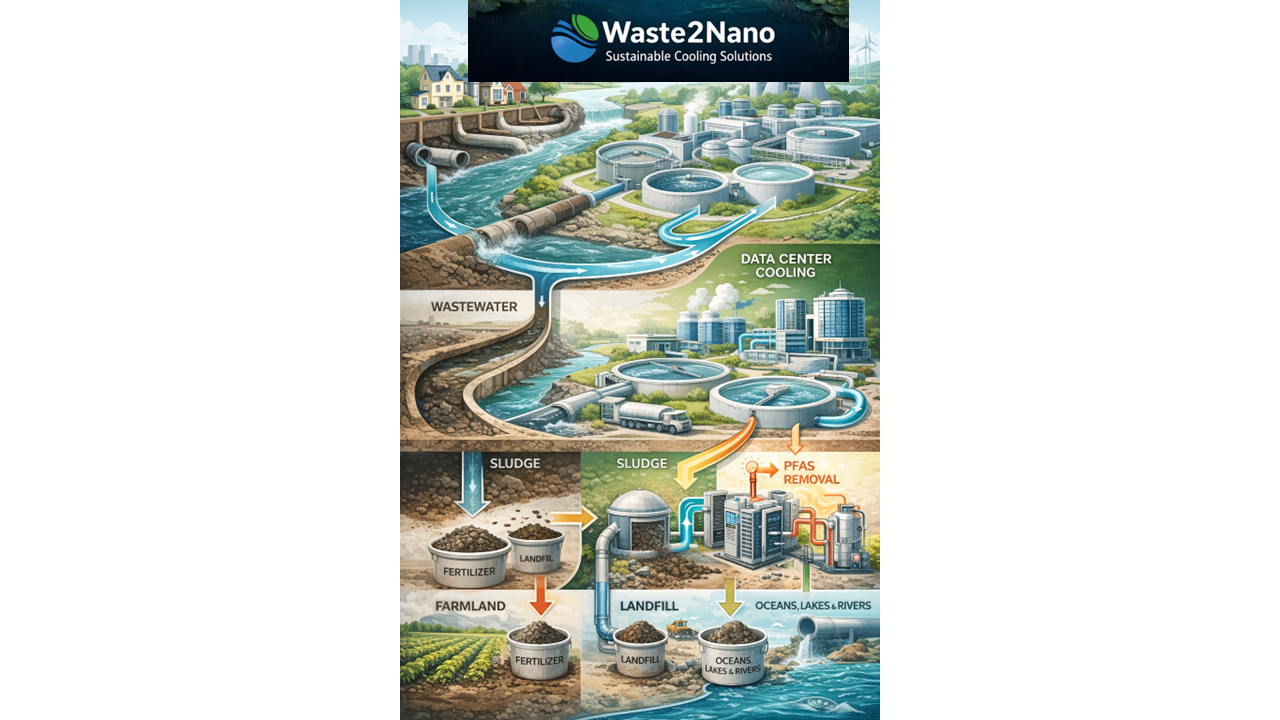
AUSTIN, TX, UNITED STATES, March 4, 2026 /EINPresswire.com/ -- When you flush a toilet, wash your hands, or take a shower, that water begins an almost invisible journey beneath your feet. It flows from your home into neighborhood sewer lines, then into larger trunk mains that carry wastewater continuously toward a wastewater treatment plant. Along the way, everything mixed into that flow stays together: water, heat, organics, fibers, fats, and contaminants. 70 Gallons/ Day = each human average daily water consumption.
At the plant, operators work to separate water from solids. The treated water is discharged or reused, while the solids become sludge or biosolids. Managing those solids is one of the most expensive and controversial parts of wastewater treatment. In many places, sludge ends up landfilled, transported long distances, or applied to farmland, raising growing public concern about persistent contaminants such as PFAS.
Waste2Nano is building a new systems for what this stream can become in the AI era: a local, always-on resource that can cool data centers while simultaneously reducing sludge burdens and converting recovered solids into high-value micro and nano advanced materials.
Waste2Nano’s integrated platform combines three outcomes in one infrastructure pathway: wastewater-based cooling for AI data centers, next-generation pretreatment that reduces solids and improves overall wastewater processing, and production of advanced materials, with targeted steps designed to reduce PFAS and other contaminants.
“We can see great worldwide interest in our solution. Integration of wastewater and AI infrastructure is an urgent need that will benefit all parties”, said Dr. Refael Aharon, Founder of Waste2Nano. “We’re looking for partners and team members who are ready to build and drive real change. This is the next generation of liquid waste management, and it’s where the future is headed”.
The triple win: utilities, AI, and advanced materials
First, wastewater treatment plants gain a pathway to reduce sludge volume, lower hauling and disposal costs, and improve operational resilience. Instead of waiting for solids to accumulate and then dealing with them downstream, Waste2Nano’s system focuses on earlier intervention and smarter separation.
Second, AI data centers gain a scalable cooling option that reduces dependence on potable water. AI compute is expanding rapidly, and cooling has become a defining constraint for cost, reliability, and sustainability. Wastewater is widely available, continuously flowing, and already embedded in existing infrastructure corridors. Cooling with wastewater via heat exchange can reduce freshwater demand, enable more stable operations, and create a shared-benefit relationship between digital infrastructure and public utilities.
Third, recovered solids become feedstock for advanced materials rather than a disposal liability. Waste2Nano targets microcellulose and nanocellulose as core products, materials known for strength-to-weight performance and broad industrial utility. These materials can be used in 3D printing, paints and coatings, packaging, composites, electronics, and other high-value applications, transforming what was once a cost center into a revenue-aligned circular supply chain.
PFAS and contaminants: a new integration point
Across the wastewater sector, PFAS has become an urgent challenge because these “forever chemicals” can persist through conventional treatment and concentrate in residual solids. Waste2Nano’s integrated concept is designed to add a new treatment leverage point by combining separation, thermal energy utilization, and targeted removal steps into one system architecture. By treating wastewater flows and solids more intelligently upstream, the platform aims to reduce contaminant loads in outputs and enable safer downstream handling and reuse.
Installable along the raw main wastewater pipe
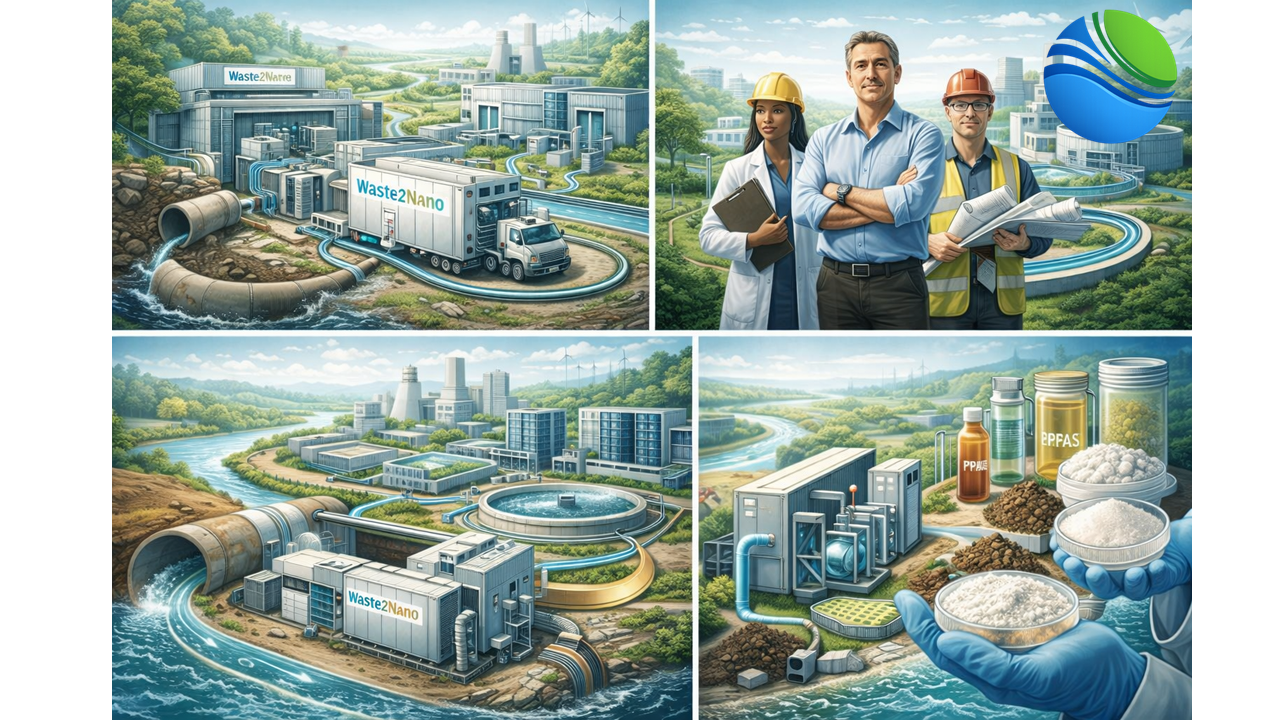
A key differentiator is siting flexibility. Waste2Nano system can be installed in any location with access to the raw main wastewater pipe. This allows deployment upstream of a treatment plant, along an interceptor, or near adjacent infrastructure where cooling demand exists.
The company replacing traditional pretreatment with high-tech, AI-based pretreatment. This creates a new option for cities and regions that need faster capacity relief and modernized treatment without waiting for decade-long plant rebuilds.
Cooling AI with wastewater while upgrading public infrastructure
Waste2Nano’s model reframes data centers as potential financiers of wastewater infrastructure improvement. By collocating or integrating cooling infrastructure with wastewater flows, the platform seeks to create a shared-benefit business case: data centers gain sustainable cooling, while utilities receive new technology investment, improved treatment performance, and reduced solids burdens.
In a world where compute is becoming critical infrastructure, Waste2Nano’s message is direct: AI growth does not have to compete with community water needs. Wastewater exists almost everywhere people live, and it can become a foundation for sustainable compute while improving sanitation and environmental outcomes.
Partnerships and team growth
Waste2Nano is actively seeking municipal and utility partners, data center operators, engineering partners, licensees and strategic collaborators to accelerate operations and deployments. The company is also recruiting team members who want to build real-world infrastructure and deliver measurable impact at scale.
Green Nanocellulose from Waste: Premium Material at Scale
Nanocellulose is one of the most promising “green” advanced materials on the market today. Waste2Nano produces nanocellulose in multiple forms, including a high-performance gel and a dry powder, enabling broad use across 3D printing, composites, coatings, packaging, and specialty materials. With exceptional strength-to-weight performance and sustainability advantages, nanocellulose can command very high market prices, in some cases exceeding $200,000 per ton depending on grade and specification. Waste2Nano’s mission is to manufacture scalable systems that can produce large quantities of truly “green” nanocellulose from waste resources—turning local waste streams into a reliable, circular supply of premium materials.
About Waste2Nano
Waste2Nano is a Texas-based technology company developing integrated systems that connect wastewater infrastructure with AI data center cooling and advanced material recovery.
Media and Partnership Contact
www.Waste2Nano.com
Email: info@waste2nano.com
Phone: 616-432-0288
Administrator
Waste2Nano
+1 6164320188
email us here
Visit us on social media:
LinkedIn
Instagram
Other
Legal Disclaimer:
EIN Presswire provides this news content "as is" without warranty of any kind. We do not accept any responsibility or liability for the accuracy, content, images, videos, licenses, completeness, legality, or reliability of the information contained in this article. If you have any complaints or copyright issues related to this article, kindly contact the author above.
